

Rachel Patenaude
As a seasonal attraction, Parc Safari is only open to the public for five or six months a year. But animals reside there all year long and caring for them means hard work. Although the season is finished for many of the park employees when the doors close to the public in the fall, a team of full-time zoologists works on-site all year, seeing to the health and well-being of Parc Safari’s main attraction: the animals. Being a zoologist takes a great deal of dedication, but most importantly, a passion for all types of creatures.
Joanie Lamoureux is the director of education and animation at Parc Safari and oversees the planning of all the educational programs on-site as well as for visiting schools and day camps. She’s also the manager of the park’s Birds of Prey team and has been working with these winged hunters for all her 14 years at the park. Raptor diet management, husbandry, and training are included in her long list of duties.
“We have 15 birds of prey, falcons, hawks, eagles, and owls, [that] all train in free flight,” she explains. To train a bird in free flight is to teach it to fly away from and return to its handler, and while this may sound straightforward it involves an large amount of discipline and patience. “We fly our birds mostly for educational purpose in our daily show,” says Lamoureux. Flying time is also good for the bird’s health and overall well-being. A bonus to having birds of prey flying freely during educational programming is that seagulls and pigeons are scared away from the site.
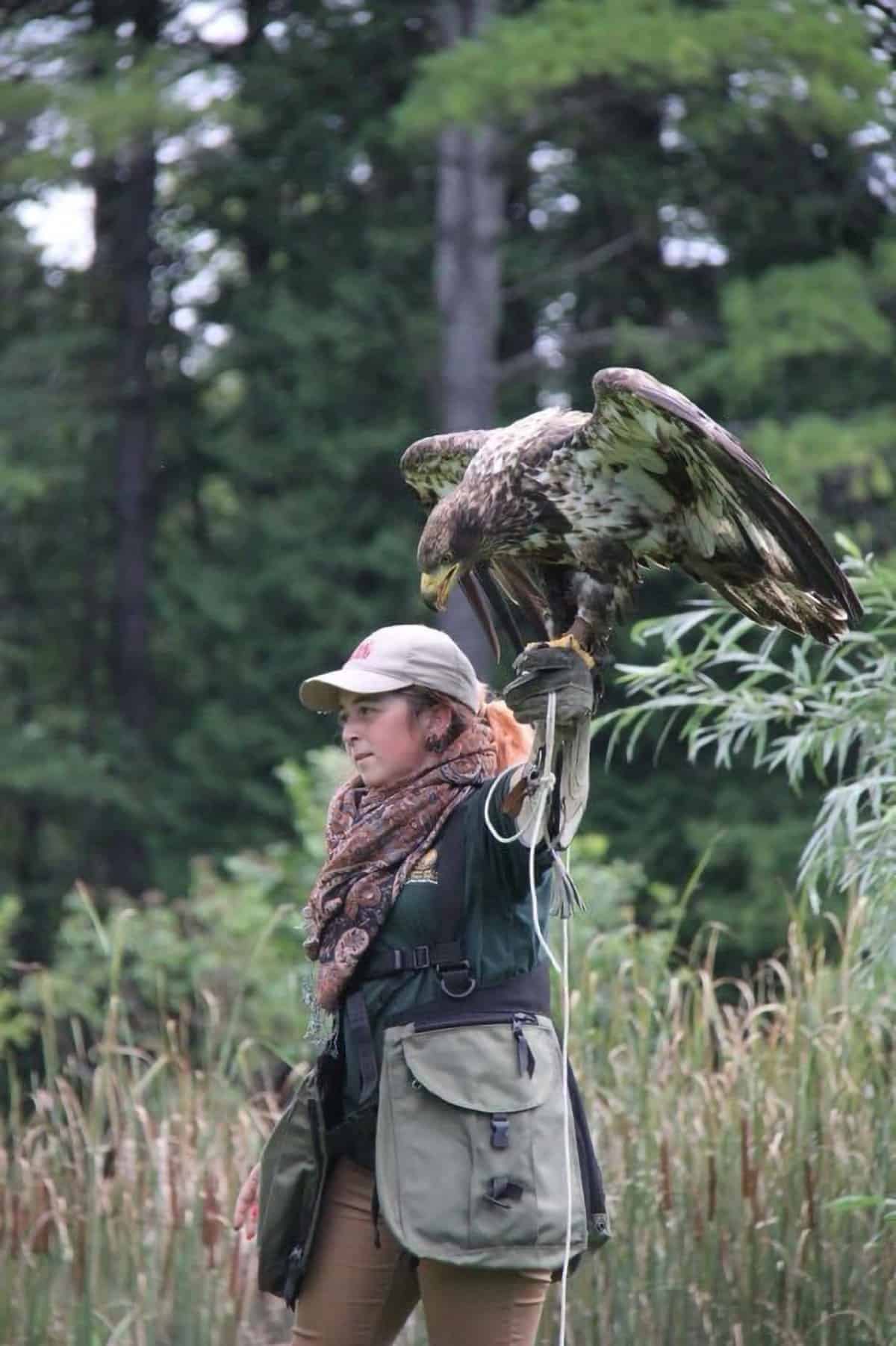
Each section of the park with its respective animals has a team of dedicated zoologists. Teams do not rotate to other sections, which helps build trust between the wild inhabitants and their familiar keepers. Trust and familiarity are important to animal well-being, as changes in routine can cause stress. “[It’s so rewarding to] get to a point when you can predict all of their behaviour; you almost feel like an old couple,” says Lamoureux. “Most birds of prey are skittish when it’s feeding time, they don’t want to get [their food stolen], so when they trust you enough to eat in front of you without any stress signs, it’s just great.”
While rewarding, the job can be demanding. Lamoureux mentions the time she had to look after newly hatched owls. They required round-the-clock care, and she had to take them to her house every night in order to maintain consistent temperature and comfort for the hatchlings and feed them on time. “I did it, and I would gladly do it again, but I can say I don’t sleep much when there are baby owls in the room with me,” she says with a laugh.
Although the relationship between the zoologists and animals is special, Lamoureux emphasizes that it’s important to “keep in mind you are working with wild animals that are socialized but never domesticated.” Although zoologists focus on the well-being of the animals, they must always keep safety in mind – for the park visitors, the animals, and themselves.
Caring for Parc Safari’s animals is a complex and multifaceted job that involves risks and hard work, but also provides a wonderful opportunity to spend time in the presence of special creatures. The zoologists have a chance to observe wild animals intimately and form bonds with them, an experience available to few people. “You do love them like a pet though, or even I should say like a family member,” says Lamoureux. “I cherish every moment and appreciate the chance I have to work closely with such amazing wild animals.”