

Ten years ago, Nathalie Lacroix and André Léger of Petits Fruits Saint-Louis discovered haskap berries more or less by accident as they flipped through a seed catalogue. Since then, the couple from Saint-Louis-de-Gonzague has grown a thriving business around the tart and juicy blue berries.
In 2011, Lacroix and Léger purchased a small parcel of land outside the village of Saint-Louis. They were trying to decide what they wanted to do with it, knowing only that they wanted to cultivate something there. Léger comes from a family that grew cash crops, but as the couple’s newly purchased land consisted of only 17 arpents, Lacroix says “The area did not allow for large-scale farming.”
While looking through nursery catalogues, the two came across haskaps (known in French as camerises) – and their curiosity was piqued. They turned to Google to learn more, and soon found themselves headed to Lac-Saint-Jean to visit a producer there. “We loved it,” Lacroix says, adding that the berries were relatively “new and different” in the province; that fact was appealing to them. “Nobody [in the area] knew about them,” she says, though “people here were open to them.”
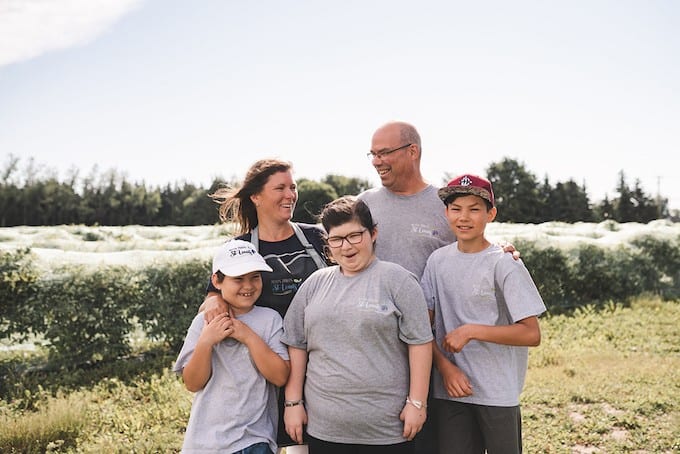
The family “threw themselves” into growing haskaps, Lacroix says; they planted about half the land with the bushes in the first year, while they considered other possibilities for the remaining space. Their passion for these berries was soon clear, though, and by the following year the property was devoted entirely to haskaps.
Local businesses seemed to be as intrigued by the berries as the Lacroix-Léger family. Over the years, the popularity of the farm’s antioxidant-rich berries has grown across the region via restaurants, bakeries and other food businesses. “You can use them the same way as you use any other kind of berry,” Lacroix says, and adds that at their house they “put them in everything!”
The berry’s name is derived from a Northern Japanese word meaning “berry of long life and good vision,” according to the Haskap Canada Association. People often mistakenly think of the blue, thin-skinned berries as being related to blueberries, but in fact they are much more closely related to elderberries and snowberries.
Compared to other berries, haskaps have some of the highest levels of antioxidants, which are thought to reduce the risks of many diseases, and they are also high in vitamins A and C, as well as fibre and potassium.
Lacroix says the farm is “a lot of work,” but that her family loves being involved with berry production. She says the business “keeps her busy full time and more,” and that she does everything from driving the tractor to marketing and delivering the product to stores. Her husband works full time away from the farm, but he and the couple’s three children join in whenever they can; they work in the fields and help with customers who come to pick berries. All of them happily act as taste-testers.
To find out more about Petits Fruits Saint-Louis and where you can buy products, visit the website at camerisesst-louis.com. You can also follow on Facebook (Camerises-Petits Fruits St-Louis) to stay informed about when the farm’s U-pick season will begin.