

Holly Dressel
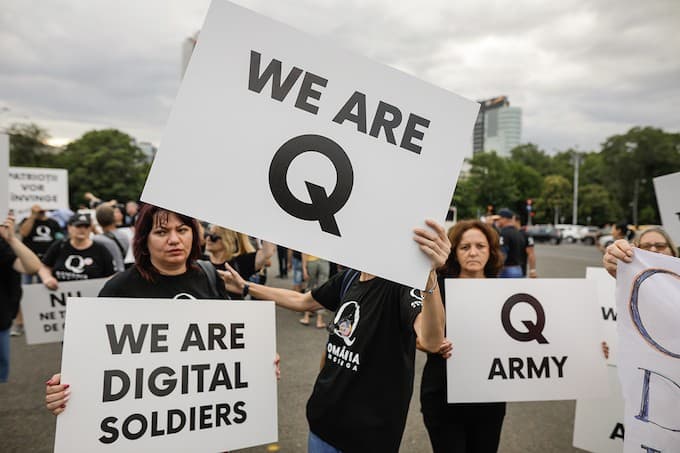
Over the past few years, we’ve been seeing what happens when the idea of what is true and what is not becomes confused or fragments into silos: millions of people become prey to believing in theories and narratives that have no basis in fact. Ironically, this tendency for large numbers of people to believe what isn’t true has arrived at the same moment that, through our computers, we have incredibly fast access to more varied information — including facts — than ever before in history. The problem now is having to pick through the tsunami of information in order to separate fact from opinion or propaganda. The many sources clamouring for attention include exciting lies about celebrities, politically motivated Russian bots and conspiracy-theory sites such as QAnon, which tells followers that a cabal of Satan-worshipping, cannibalistic pedophiles is running a global child sex-trafficking ring which Donald Trump will defeat. [Associated Press, Feb. 9, 2020; and Roose, Kevin: “What Is QAnon, the Viral Pro-Trump Conspiracy Theory?”, in the New York Times, Aug. 28, 2020.]
Because of how the human brain is wired to try to understand the world around us, there is no “fact” out there that is so preposterous that surprisingly large numbers of people won’t believe it, if it meets certain criteria. It must make sense in a logical way that connects seemingly separate occurrences into a coherent whole; it thereby seems to explain a lot of worrisome events (like the coronavirus pandemic) that are in reality not linked, extremely complex or coincidental. Such an “alternative fact” corresponds with each person’s innate (and often unrecognized) deep-seated beliefs and world view; it is repeated, often, by a variety of other sources the person comes in contact with. For people who weren’t trained more stringently in how to tell fact from fiction, meeting these criteria is enough to satisfy many that they’re being given reasonable explanations, especially for things that frighten or overwhelm them.
Part of the problem is that the falsehoods are often brilliantly disguised as fact, found on official-sounding websites or in what appear to be newspapers or think tanks, with names like Oneworld.press (Russian pro-Trump bots); the Quebec Times, the Siver Telegram (purporting to be Quebec English-language papers, but out of the Ukraine or Russia); or U.S.-based Facebook pages called Canada Eh and Canada Today that publish fake news and plagiarized stories. There are very convincing videos on YouTube that purport to expose, say, the Clintons as drug dealers, complete with witnesses, locations, victims, and high production values, that look like what one would see on respectable news programs. Besides YouTube, such videos and articles are presented on many other platforms, like Facebook, Twitter or TikTok, none of which accept significant responsibility for making sure what they post and distribute is real.
On Jan. 17, in her series Good Sunday Morning, former Green Party leader Elizabeth May pointed out the distinction between the claims of such platforms and actual publishing. Publishing means that such institutions as the New York Times, CBC News or The Gleaner “bear a [legal and fiduciary] responsibility for what they print.” That means we can be sued for telling lies, for libel or defamation, for wilful misrepresentation of fact. Online “platforms” like Facebook, although they are where many people get their news today, are free from such responsibilities. It also means they should never be used as what is called “primary sources”: respected, established sources, like a large newspaper, exact quotations from accredited experts in the field in question, academic or governmental institutions. Even a professional columnist writing a serious editorial in, say, The Guardian, is not a primary source. Any editorial, op-ed, and — this is very important — blog, is not considered a source of fact but only of individual opinion. When students cite such things in their college level academic papers, they are penalized for not using acceptable sources.
Facebook and the other platforms’ immunity from responsibility means they also, as May says, “undermine legitimate journalism.” They use the content of newspapers that must pay reporters, editors and photographers to research and write what they publish — and which the platforms copy for free. While your Facebook feed, like mine, might include stories from legitimate sources, such as the NY Times, the CBC or Health Canada, these true sources are having their former subscribers and advertisers, their financial support, taken from them. As local news sources go out of business because of so much online “free” news, there are fewer and fewer responsible sources for information that concerns the public; and there is more fake news.
Fortunately, there are ways to learn how to fact-check, although they only work on websites, not tweets or Facebook posts; but often such posts refer to sources or websites. You need to go back and determine the source for what is being claimed. If it’s not an organization recognized as being reasonably respectable (say, the Globe and Mail or Harvard University), then check the “About Us” page on their website. It should list their staff, their board of directors, and you should be able to find their mission statement, their “links” section and often their annual reports. All these should help you figure out if they’re staffed with reliable people and aren’t allied with questionable groups (you can google the names to check on their training and past affiliations). Most especially, you can find out where they get their funding. If you can’t find these things on the website, that’s a red flag that they may have intentions other than providing straight information.
One of the reasons that people go to Twitter and Facebook is that stories tend to break there faster than on TV or newspapers. That’s fine for a preview, but if the really reliable sources don’t pick it up, you know something’s wrong. The reason the latter are slower is precisely because they have a constant responsibility to check the facts and make sure the riot in Indonesia broadcast on Twitter, or the attack on a school shown on YouTube, is real and actually happened, which takes research, phone calls, interviews and more time. This is why you sometimes hear on CBC such phrases as “we cannot yet confirm that statement …” It’s because they can’t just wildly jump up and down and say whatever they want, like Twitter can.
It sounds like a daunting amount of time just to get your news; but not doing it means you might fall in with the hidden agendas of those providing the “information” your world view might want to believe. You might find yourself helping serve commercial, political, selfish or even criminal interests, not truth and fairness, as we all like to believe we want to do. The responsibility of every person in society is to not spread lies; because if there are too many, there is no coherent society left. The German philosopher Hannah Arendt said it best: “The result of a consistent and total substitution of lies for factual truth is not that the lie will now be accepted as truth and truth be defamed as a lie; but that the sense by which we take our bearings in the real world … is destroyed.”