

Small things can have a big impact on your journey through cancer and there are many resources available to support you. These are some websites that can make your cancer journey a little easier. Online, the Canadian Cancer Society has many free services and links. Free wigs and transport and support for cancer survivors and caregivers are just a few. You can reach them online at cancer.ca.
Hope and Cope is also an online support for all aspects of cancer. They have a Wellness Centre at the Segal Centre at The Jewish General Hospital. Online, they are jgh.ca.
Since 1989, Look Good, Feel Better online has offered an array of free services to cancer patients, from podcasts on various subjects to online workshops on makeup, skin care, nutrition, yoga, exercise classes and support for cancer patients. Many of these workshops are live online so that experts can answer specific questions. Many sessions come with free products. For instance, the makeup workshop demonstrates how to cope with cancer-related hair loss and makeup issues. After the workshop, LGFB will mail a cosmetic bag filled with products safe to use on cancer-challenged skin. You can reach them online at lgfb.ca.
The Suroit Hospital in Valleyfield has an information portal that offers practical tools and information to cancer patients and their caregivers. The hospital works with the Volunteer Action Center which offer various support services, such as transportation, and many workshops. The online portal is santemonteregie.qc.ca.
If you receive cancer treatments at the MUHC, Cedars Cansupport Centre is the place to visit for all your needs. From loaning wigs to free headscarves and beanies, they have it all or they can direct you how to find what you need. There is a monthly Cansupport program calendar that offers free workshops and classes for MUHC patients. The programs cover everything you can think of from support groups to art classes. Some of these programs are online, some in person. Online you can reach them at cansupport.ca.
The Rossy Cancer Network is also a part of the MUHC. They offer free informational videos that can guide you through your treatments. View them online at precare.ca.
A checklist
If there is one takeaway from this cancer experience, it would have to be that it’s the little things that count. These are a few little things that make a big difference.
A large folder with pockets, a pen and pad are a life saver. Tuck your chemo book, your appointment slips, prescriptions, information books, post-its and a calendar into it. Write down questions that you want to ask your doctors. Take it with you to every appointment.
If you are an MUHC patient, they will gift you a Blue Bag. If not, you will need a small backpack for your folder and your treatments needs. This bag should hold a blanket, mints or mint gum and snacks. Sometimes treatments can last a long time, and you need to be comfortable. A travel pillow can help and bring a book or an iPad (there is usually Wi-Fi) to keep you busy.
Perhaps the best gift I received was an electric throw blanket. Throughout the different treatments there are times when you need comfort and warmth. This blanket brought both when my body felt a little overwhelmed.
Chemo brain is real. It is easy to forget when and if you took your pills, so a pillbox can help. Purchase one with morning and night compartments.
Start a journal. Journaling can help you work through your thoughts and emotions. You can log how you are feeling daily, your experiences and thoughts along your way. A journal is also a way to look back, which is very important as you progress through treatments. Your mantra becomes, “I got through this, so I can get through the next step.”
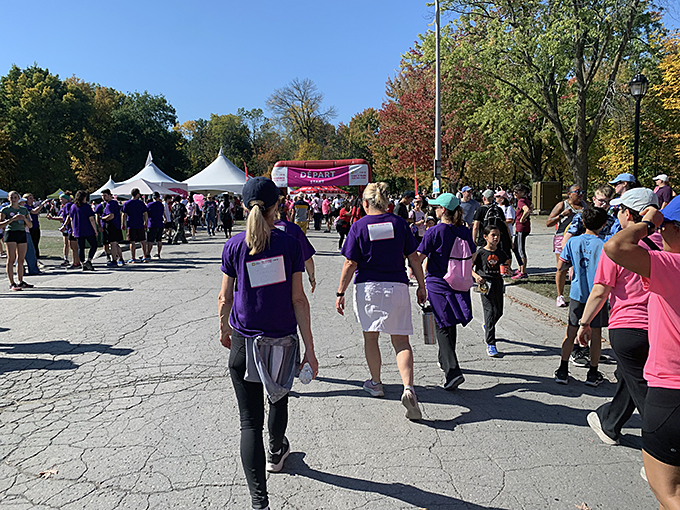
Walk everyday. Sometimes it’s hard, but even a small walk can help your body and mind. There are multiple health benefits to walking, and you always feel more revived afterwards.
If you have a companion who can accompany you on your treatments, you are lucky. Having someone with you is helpful in so many ways. There is a lot of information that is given to you all at once and it is hard to take it all in. A caregiver is a second pair of ears and can help you sift through the medical advice and medications.
Perhaps the most important advice of all is, be your own advocate. Make lists to ask your doctors and nurses. Write down the medications that you are taking at the moment. This changes all the time, and you need to be clear on the medications you take. Ask questions about treatments and side effects. Your situation can be overwhelming at times, but write down your concerns. Communication is the key to understanding.
Don’t ask Mr. Google! The above-mentioned reputable organizations are there to help, and remember that you are not alone.